

 2 minute read
How to Make Reuse Work
We hosted a webinar gathering participants eager to learn how to make reuse a practical, financially sound part of their organisation. Amelie was joined by our CEO and co-founder, Henrik, to walk through the fundamentals of reuse, real-world success stories, and what it actually takes to get started.
Why Reuse Matters
Reuse is simple at its core: keeping a functional product in use instead of replacing it with something new. Yet despite how intuitive it sounds, the real estate and construction sector has become one of the most waste-intensive in the world, responsible for roughly 40% of total waste. But the issue isn’t only environmental. Recent studies show that up to 57% of budgets are lost due to the inefficiencies of the linear economy. Reuse helps close that gap — making it not just sustainable, but financially smart.
🎥 Watch webinar
Internal vs External Reuse — and Where to Start
A key principle discussed in the webinar was recognising the difference between:
- Internal reuse: when surplus products from one part of the organisation are reused in another
- External reuse: when products are passed to another company
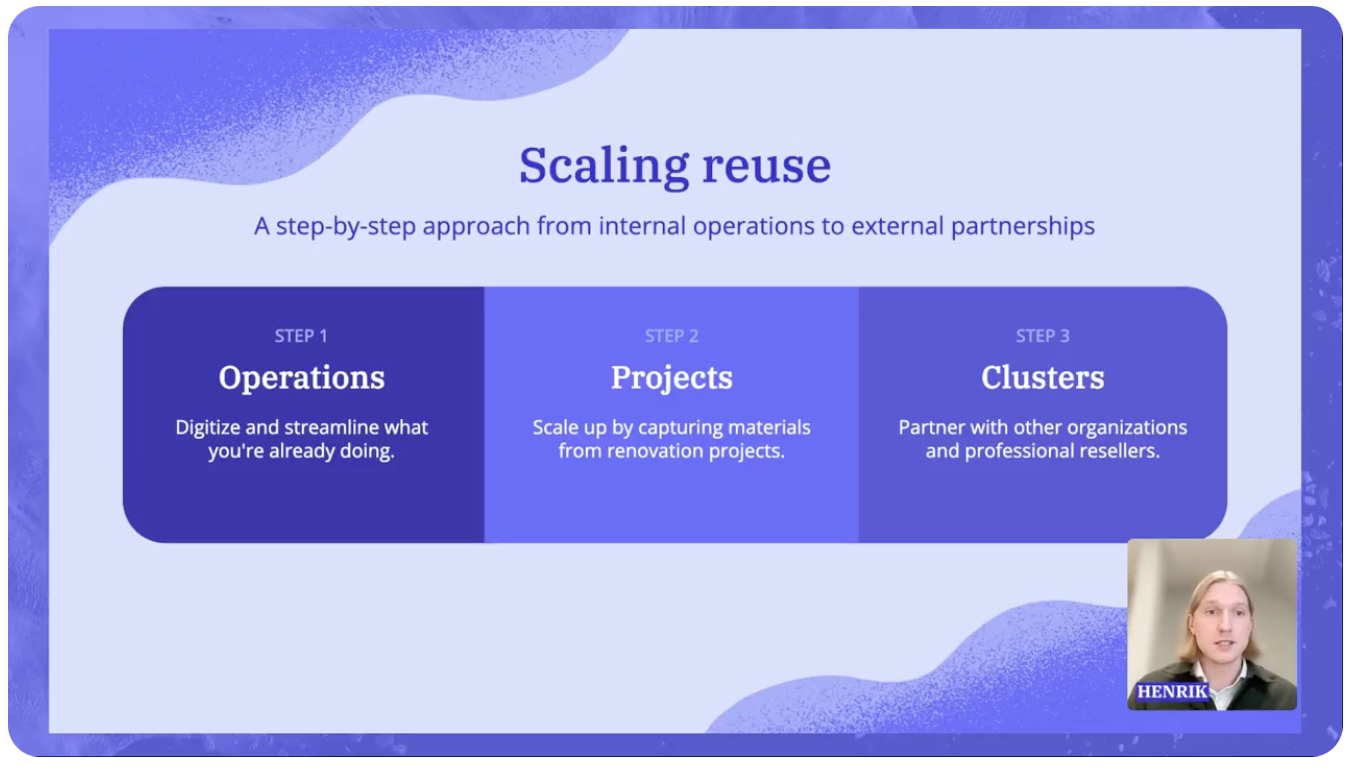
Most organisations already practice some form of internal reuse — just not in a structured way. That’s where the biggest gains lie. Henrik’s advice was clear:
Two Organisations Showing What’s Possible
We highlighted two standout case studies:
Tunabyggen – A Swedish real-estate owner with 5,000+ apartments.
By centralising their reuse hub and repairing rather than discarding appliances, they’ve achieved substantial financial and climate savings. Their approach began small — and grew into a company-wide, data-driven process.
Jönköping Municipality – A municipality with 13,000 employees.
After switching to Palats earlier this year, their reuse volumes skyrocketed. In just ten months, they saved over €1.5 million in purchasing costs and avoided 200,000 kg of CO₂. They also run their reuse hub through a work-training programme, combining financial, environmental, and social sustainability.
How a Modern Reuse Process Works
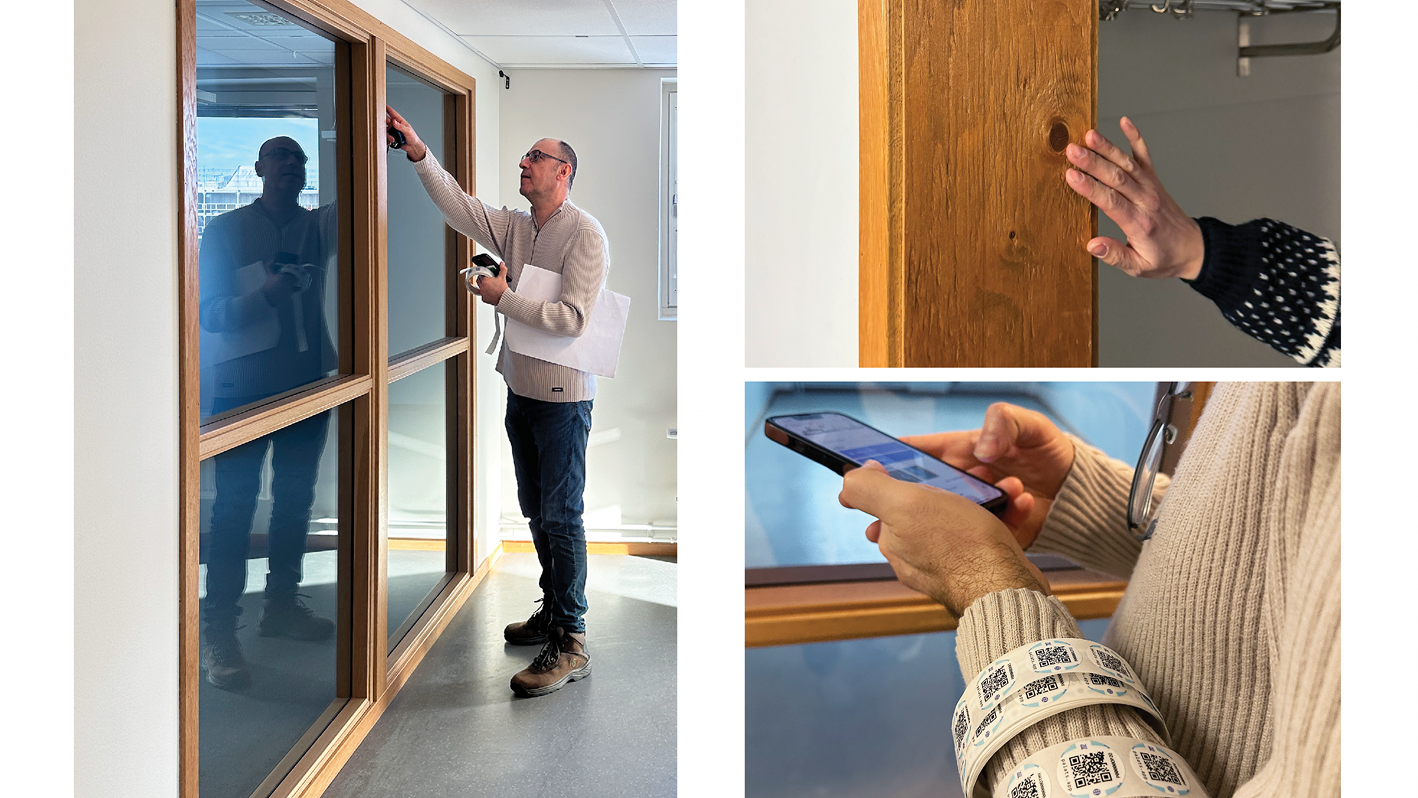
A successful reuse operation usually centres around a dedicated reuse hub. Instead of scattered storages across the organisation, one shared space becomes the drop-off and pick-up point for all surplus products. A designated owner, or team, inventories the items every week, and the system makes everything visible to the organisation.
This enables:
- Trust in the quality and availability of items
- Easy logistics
- Accurate tracking of financial and environmental savings
- Data-driven decisions about what to repair, reuse, or replace
What You Actually Need to Get Started
One of the strongest messages from the webinar was that you don’t need large investments. In fact, most organisations already have 3 out of 4 prerequisites:
- A storage space (even small is fine)
- A designated process owner
- Basic logistics (knowing how people access the storage)
- A digital system to visualise and track items
Start small, validate the financial case, and scale from there.
How to Understand Your Potential Savings
We introduced two ways to calculate your reuse potential:
- Palats’ internal ROI calculator
- A new downloadable tool, coming soon on our website, helping you set reuse targets based on your number of apartments or employees
These tools make it easy to build a business case and get management on board.
Conclusion
Structure and digitalise the reuse you already do — start small, prove the value, and then scale. And if you’d like to learn from others who have already made this journey, we’re happy to connect you.
🎥 Watch webinar
👩🏻💻 Get a demo