
 3 minute read
Möbelcirkeln in Jönköping Municipality has been operating for over two decades, starting on a small scale with mainly manual methods. It is an internal furniture circulation system where municipal departments share, repair, and reuse existing items. This approach reduces costs, lowers the climate impact, and gives old furniture a new life in different spaces. Today, it is Sweden’s second-largest internal furniture circulation, based on the number of items.
In February 2023, the operation took a digital leap with the launch of its first fully online catalogue, making it easier for departments to locate and reuse furniture internally.
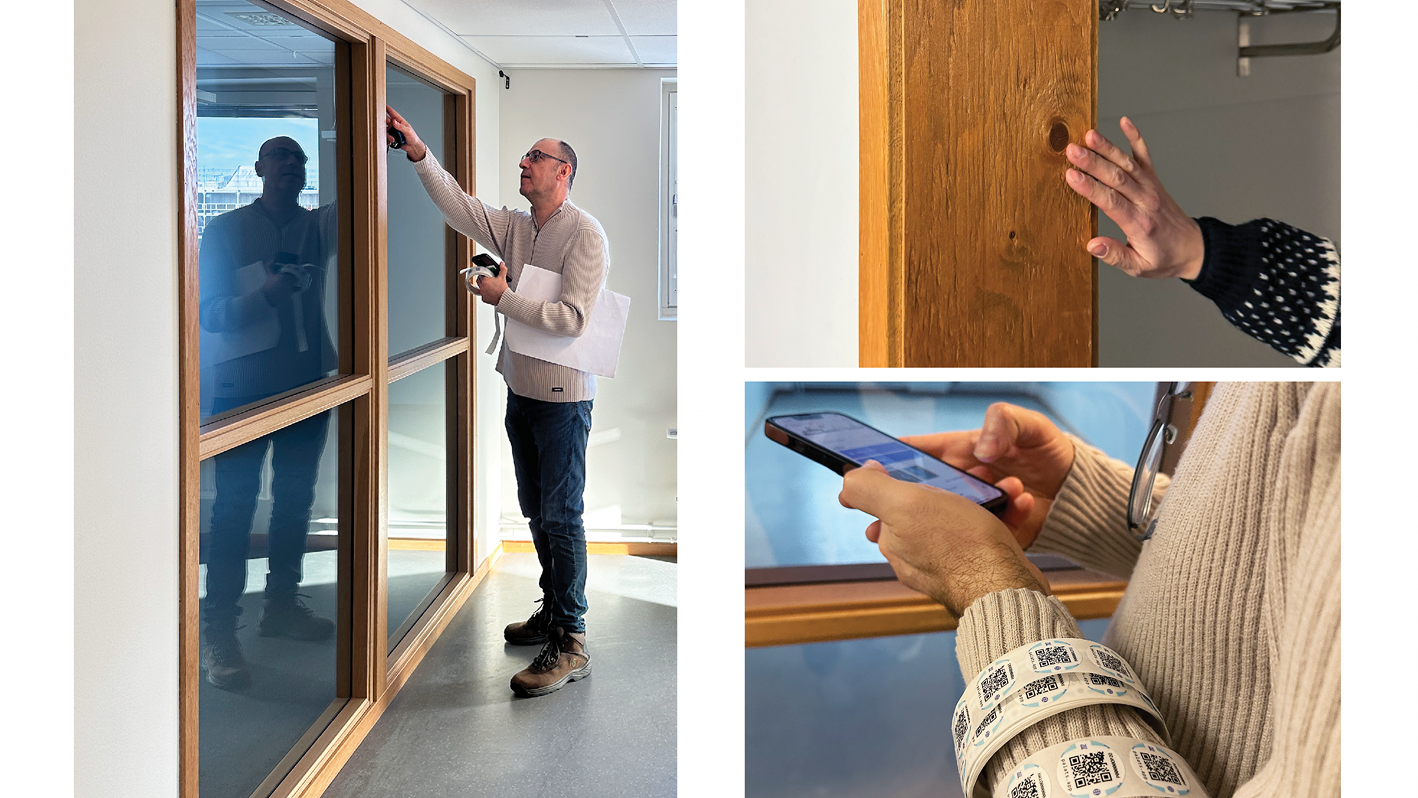
By March 2025, the municipality had taken another significant step, choosing Palats as its platform to streamline and expand reuse to new levels. Ease of use was a key factor in the decision, says Arno Willemse, Unit Manager at Möbelcirkeln. “We want everyone who uses Palats daily to be satisfied, so that inventorying and listing items runs smoothly.”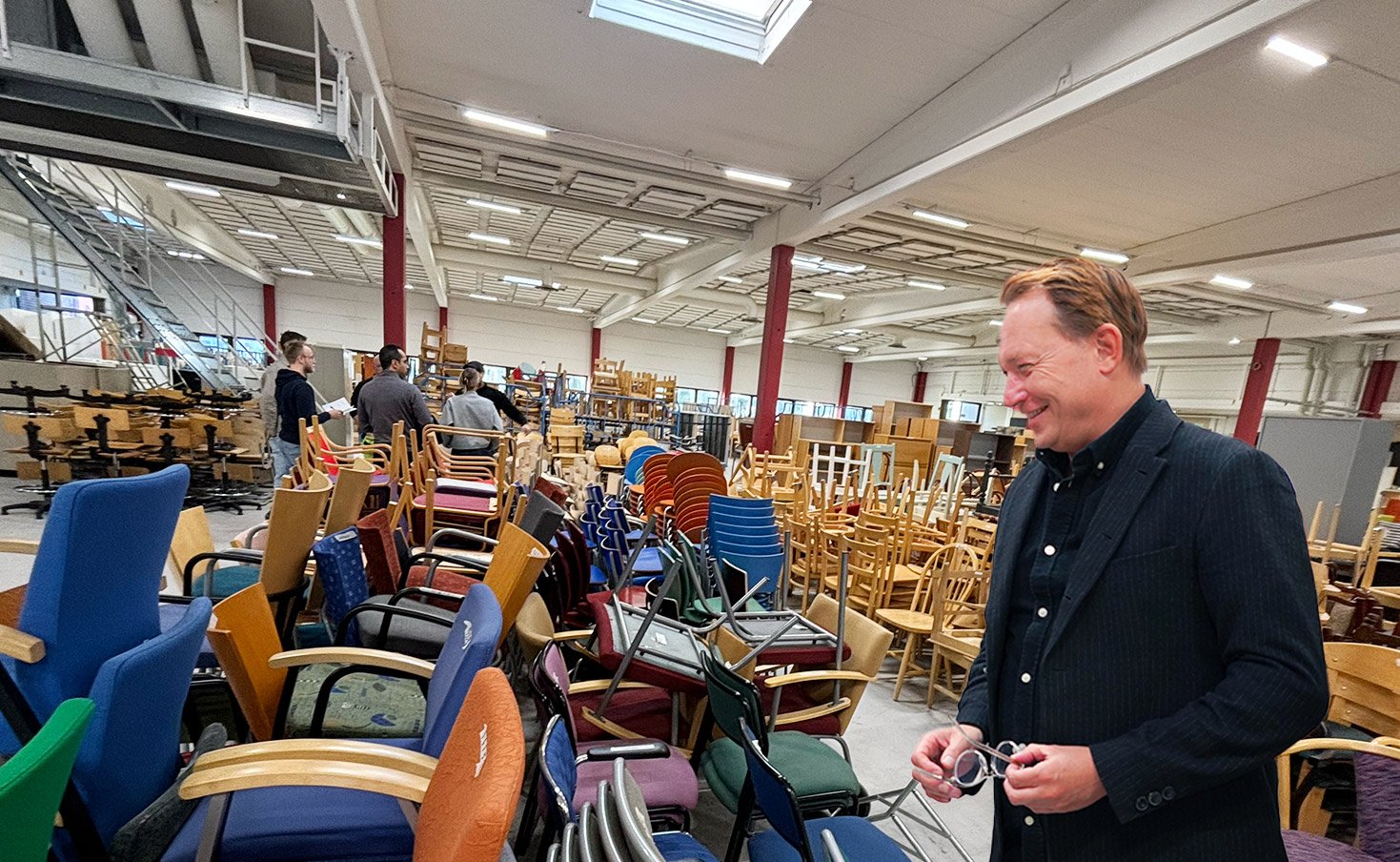
How reuse works in Jönköping Municipality
Möbelcirkeln is based in Bankeryd, just outside Jönköping. The warehouse is at the heart of the operation—this is where all furniture no longer in use is collected from the municipality’s various departments. A lorry transports the items to the site, where they are carried into the workshop and storage area for inspection. Can they be reused?
In the vast majority of cases, the answer is yes. Committed staff repair, clean, photograph, and catalogue the furniture so it can be redistributed to other municipal departments. For as many as 60–70 per cent of items, however, a simple wipe-down is all that is needed before listing them on the Palats marketplace, according to Arno.
Reuse kept in motion through labor market programs
Möbelcirkeln is part of the labour market department and is staffed by 12–15 participants taking part in various labour market programmes. Under guidance and supervision, they carry out workshop tasks, learn about logistics, set goals, and develop routines. The aim is to provide strong foundations for future self-sufficiency through internships, employment, or further study.
“This is a highly sought-after programme, and we see that many young people want to come here. I believe they value the opportunity to do hands-on work and that the operation, in many ways, resembles a regular workplace,” Arno continues. At the same time, participants contribute meaningfully and feel that they are making a difference. That impact is evident in the results—both in cost savings and reduced CO₂e emissions.
Möbelcirkeln shows how reuse can be humane, smart, and effective. By recognising the value of what already exists, Jönköping Municipality successfully combines sustainability, sound economics, and social responsibility—while inspiring others to do the same.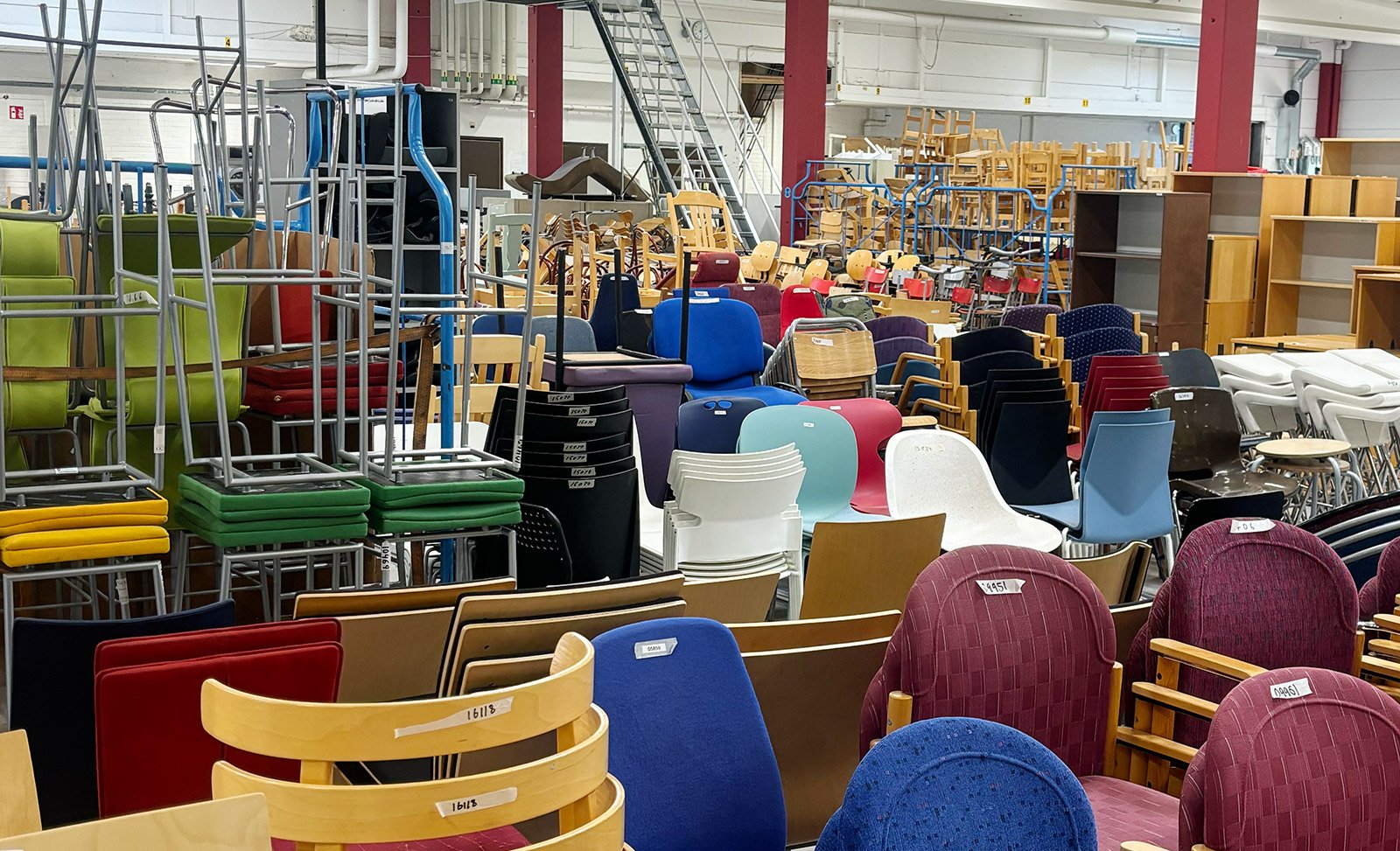
Drawing attention beyond Jönköping
“We really see that interest in reuse is high, and that what we are doing in Jönköping inspires others,” Arno explains. “We’ve had neighboring municipalities come to visit, as well as economics students and interior architects who want to learn more about our operation and our circular approach.”
Opportunities and challenges
“There are incredible opportunities in reuse—as long as you take the first step,” Arno says. “With digital tools, you can quickly get an overview of all items and immediately see both the financial and climate-related savings. Since we introduced Palats, the municipality alone has freed up more than SEK 13 million by avoiding new furniture purchases.”
The challenge in Jönköping, he explains, is encouraging all departments to start using it. Some procurement routines are outdated, and reuse is not always the first option, even though it should be. Work remains to ensure that everyone checks the furniture library first—it is, after all, taxpayers’ money. Funds spent unnecessarily on new furniture could instead be used to hire additional staff in healthcare and schools, for example, Arno adds.
Jönköping Municipality’s reuse in numbers


Climate savings (CO₂e):
Between March and November 2025, reuse resulted in savings of 181 910 kg of CO₂e.
Financial savings: During the same period, the municipality freed up SEK 13 391 208.
Reused furniture categories: Items that passed through the reuse flow include meeting chairs, storage cabinets, sofas, student chairs, and various other furnishings and equipment—demonstrating a broad and diversified circulation.
Facts about Jönköping Municipality
Population 147 654 inhabitants as of 31 December 2024
Municipal employees: 13 000 people engaged in municipal services
Palats users: 1900
Organisation: The municipality’s work is managed across 8 departments.
Want to see how Palats can help your municipality?
Book a demo or contact us to hear how other municipalities have done it.